
Criminal Cases in Pendleton County Courts
Pendleton County belongs to Kentucky's 18th Judicial Circuit and District. Circuit Court hears felony prosecutions. District Court handles misdemeanors, violations, traffic cases, and preliminary matters in felony cases before a possible grand-jury indictment. Case headers distinguish the court, division, case number, case type, filing or charge date, and current status. That court designation matters because a District Court preliminary file and a later Circuit Court felony file may describe connected stages without being the same docket.
The elected Circuit Court Clerk at the Pendleton County Judicial Center is custodian for both courts. Falmouth and Butler do not operate separate municipal criminal-case databases. City-ordinance prosecutions proceed through Kentucky District Court, so a local police arrest that results in a filed charge is traced through the county clerk. AOC maintains statewide CourtNet data, but it expressly directs trial-court file requests back to the clerk where the case was heard.
Start at the Pendleton County Court Clerk
The practical records counter is the Pendleton County Judicial Center, 120 Ridgeway Avenue, P.O. Box 69, Falmouth, KY 41040. The clerk's office is open weekdays from 8 a.m. to 4 p.m. and can be reached at 859-654-3347. Call before traveling to confirm that a file is available, ask about current copy or certification charges, and clarify any rules for recordings, electronic devices, or unusual items. The official local page lists cash, check, and money order, with ePay for eligible payments, but it does not publish a criminal-file copy schedule.
The Kentucky Court of Justice explains why case requests begin with the court clerk. Its request-court-records instructions are captured below.
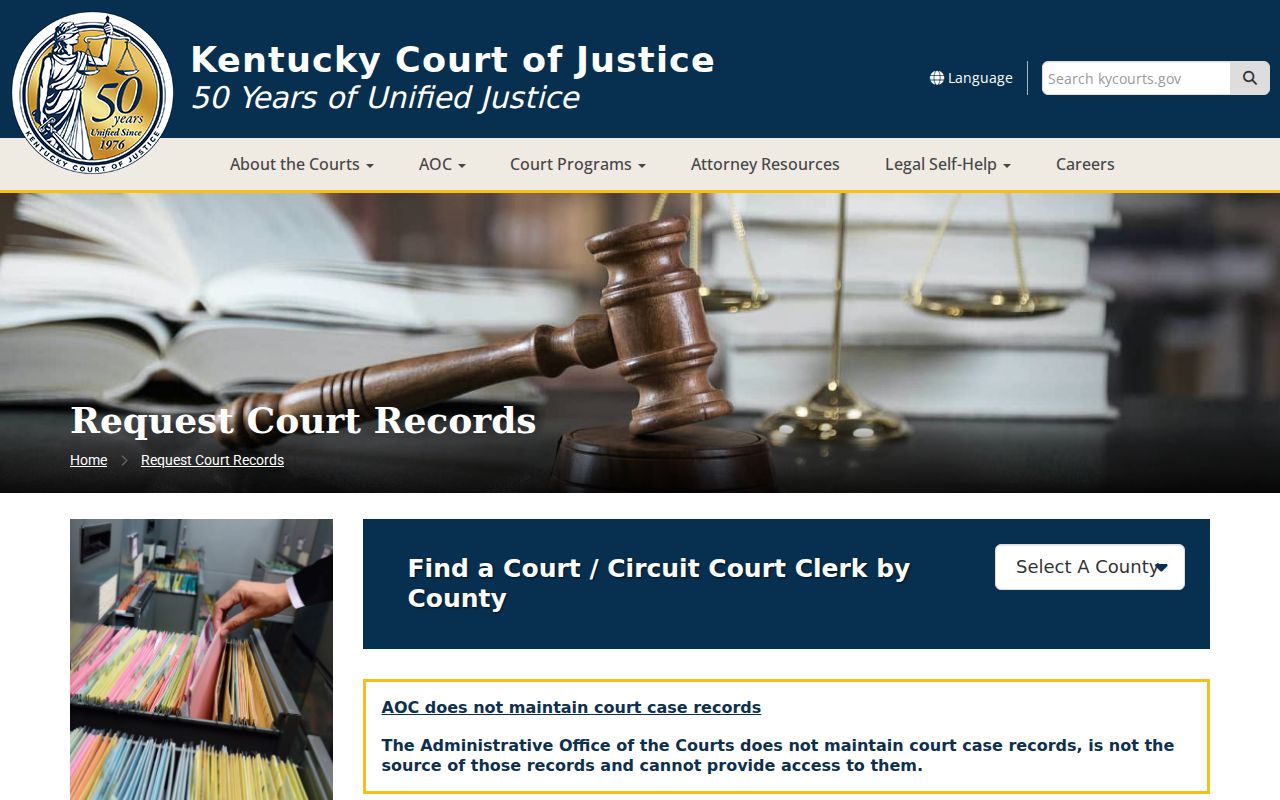
That source supports the local route: AOC administrative offices are not the custodian of Pendleton County trial-court files.
How to Search Pendleton County Case Records
There is no free, anonymous Pendleton County case-detail portal. The most reliable search begins with the clerk and stable identifiers. A statewide AOC CourtNet-derived report can supply a county and case number, but its face states that it is not an official court record.
- Call 859-654-3347 or visit the Judicial Center during weekday counter hours and identify whether the matter is likely District or Circuit Court.
- Give the full name, approximate filing year, case type, and case number if known. Use date of birth only through an authorized channel.
- Ask to inspect the docket and identify the complaint or citation, indictment, motions, bond entries, orders, judgment, sentence, and any available recording or transcript.
- Read original and amended charges separately, then match each charge to its disposition and date. A dismissal on one count does not describe every count.
- Request the specific copy or certified document needed from the clerk and ask for the current fee before ordering.
| Field Label | Type | Required | Notes |
|---|---|---|---|
| Requester account or email | Account or text | Online | AOC online services use email verification. |
| Subject name | Text | Yes | Use the full legal name and confirm identity with other details. |
| Date of birth | Date | Generally | Helps separate people with similar names. |
| Social Security number | Sensitive text | Channel-dependent | Provide only if the official form requests it. |
| Search or report type | Selection | Yes | One-time and prepaid customer routes exist. |
| Payment | Card | Paid order | Eligible cards carry the published surcharge. |
CourtNet Report or Pendleton Court File?
An AOC report is a statewide lead. It can show the county, case number, original charge, amendments, disposition, charge and disposition dates, and clerk memos. Coverage includes felony records back to 1978 and at least five years of traffic and misdemeanor material. It excludes federal information, confidential case types, and expunged or purged matters. Its “Not an Official Court Record” label is a warning to verify the result, not a minor caption.
The court file is the evidence behind the summary. An entered order can resolve whether a charge changed, whether a motion was granted, and what judgment actually applies. When the report and a recollection disagree, ask for the docket plus the signed disposition or judgment rather than treating the short summary as the final word. This distinction also matters when a case update has not yet flowed from the clerk into CourtNet.
What the Pendleton County Case File Shows
A Pendleton County case file organizes the Commonwealth's prosecution by event and document. Availability depends on the file, and the clerk may redact or withhold protected material. The most useful document is the one that answers the reader's exact question, such as an indictment for the filed felony charge or a judgment for the outcome.
| Case Number & Court | Identifies Circuit or District Court, division, case type, filing date, and the docket to cite in requests. |
|---|---|
| Charging Document | A complaint, citation, information where authorized, or indictment states the filed allegations and applicable KRS citations. |
| Docket Entries | A chronological index records filings, hearings, motions, orders, pleas, warrants, and other court activity. |
| Hearing Dates | Entries may show preliminary hearing, arraignment, motion, trial, sentencing, or review dates and resulting actions. |
| Disposition & Judgment | Shows the outcome for each charge, including amendment, dismissal, acquittal, diversion, plea, or conviction. |
| Sentence & Conditions | May list incarceration, state-run probation, fines, costs, restitution, concurrent or consecutive terms, and other conditions. |
The Kentucky sentencing statutes provide context for judgments. The official KRS Chapter 532 sentencing materials appear in this capture.
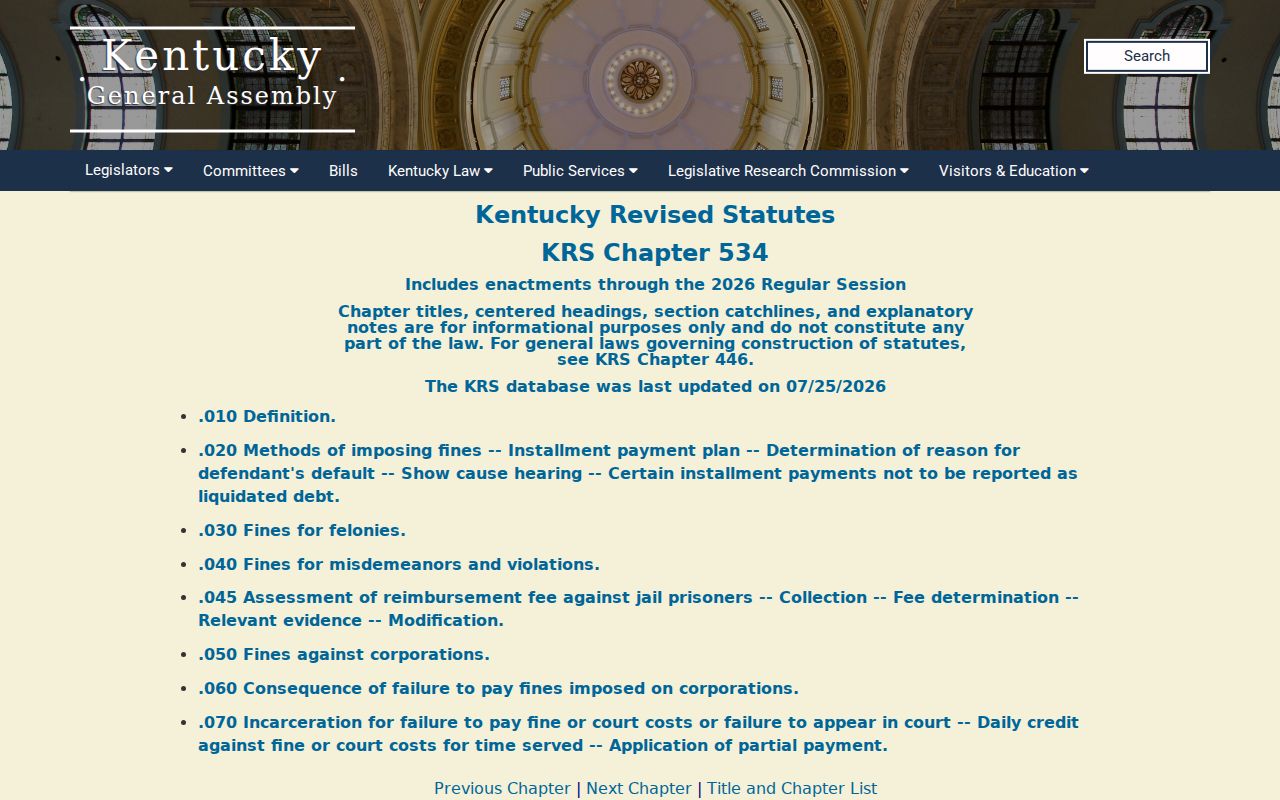
Statutory ranges explain the legal framework, while the Pendleton County judgment states the sentence imposed in a particular public case.
Reading Pendleton County Amended Charges
Arrest allegations, filed charges, and final dispositions answer different questions. A complaint can begin a case, a grand jury can return a felony indictment, and a prosecutor may later amend or dismiss a count. Read horizontally across each charge rather than stopping at the first offense name. Match the original description and KRS citation to any amended description, then find that count's plea, dismissal, acquittal, diversion, or conviction date.
Terms on the docket are procedural clues. “Arraignment” marks the appearance where charges and plea are addressed. “Nolle prosequi” records a prosecutor's formal decision not to proceed. A “capias” is a court command to take a person into custody, often after failure to appear. None of those terms alone proves the final result. The signed order and judgment remain the controlling sources.
Stages of a Pendleton County Criminal Case
A typical path begins with an arrest or citation and an initial District Court record. Misdemeanors can remain there through plea, trial, or dismissal. A felony proceeds through preliminary stages and may reach the grand jury; if indicted, the prosecution continues in Circuit Court. Motions, negotiations, hearings, trial, disposition, and sentencing create new docket entries. The research provides no dependable local duration for each stage, so a case should be followed by its actual entries rather than a generic timetable.
Case flow: Arrest › Booking › Complaint or Citation › Initial Appearance › Preliminary Hearing › Grand Jury or District Resolution › Circuit Arraignment › Motions or Trial › Disposition › Sentencing
Note: One incident can produce connected District and Circuit records, so ask the clerk to check both when a felony advanced.
Finding Off-Site Pendleton Files
An old case missing from the local shelf is not automatically nonexistent. The clerk may determine that the file remains in the office, has moved to another records facility, or was destroyed under the judiciary's retention schedule. If an off-site public file still exists, ask for the storage facility plus the case number and file-locator number. Those identifiers prevent a second office from having to reconstruct the request from a name alone.
Call before a visit, especially for an older matter, a transcript, a recording, or a certification. The county page does not state archive retrieval, transcript, search, or certification fees. Ask for the current price and turnaround rather than assuming inspection or copies are free. If only a statewide AOC summary is available at first, use its county, case number, and dates to frame the clerk request.
Expungement and Pendleton Court Results
Kentucky excludes expunged matters from ordinary AOC reports. The process begins with an AOC expungement certification, followed by the correct filing in the county where the charge arose. Qualifying dismissals with prejudice and acquittals entered on or after July 15, 2020 are generally auto-expunged after 30 days, excluding traffic cases. Older or conviction-based matters follow their applicable statutory process.
The official Kentucky expungement process is shown here.
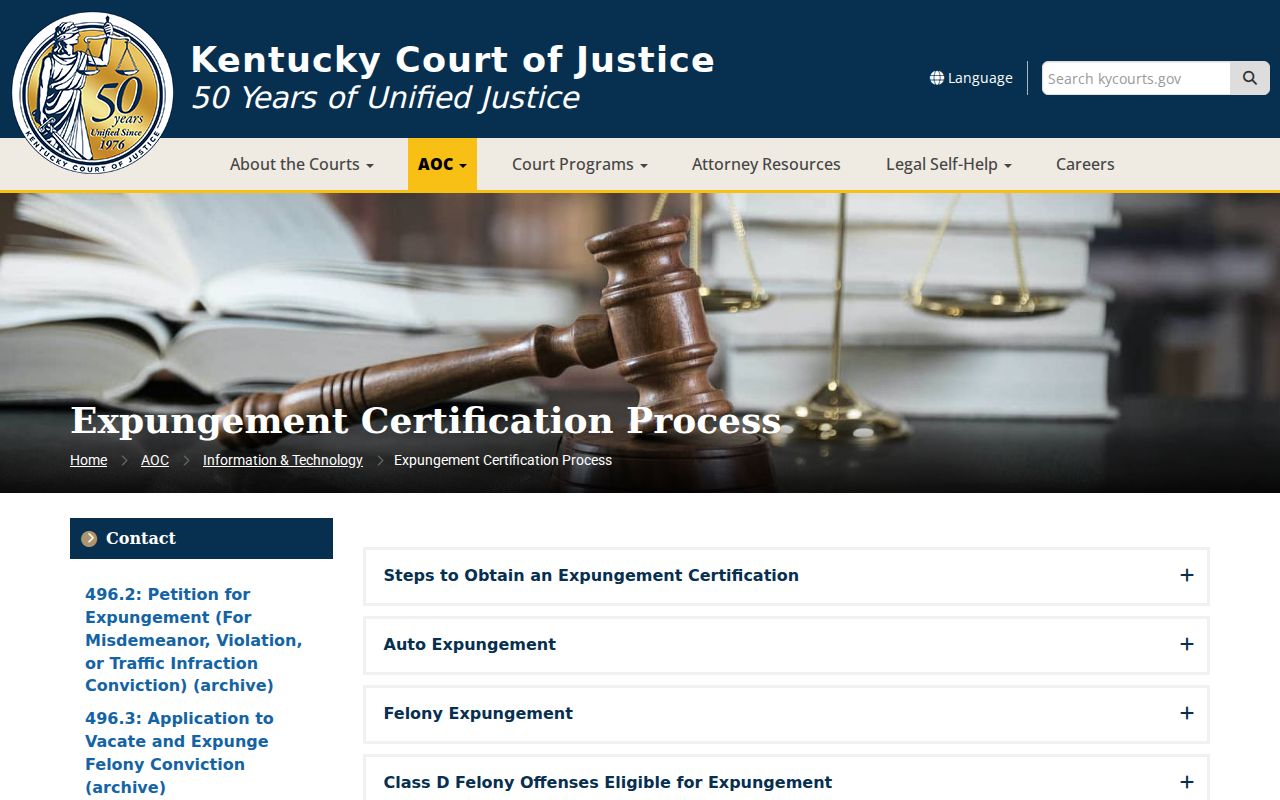
The certification is a required preliminary record search, while the Pendleton County clerk receives the petition tied to the original eligible case. Kentucky's governing provisions are collected in KRS Chapter 431.
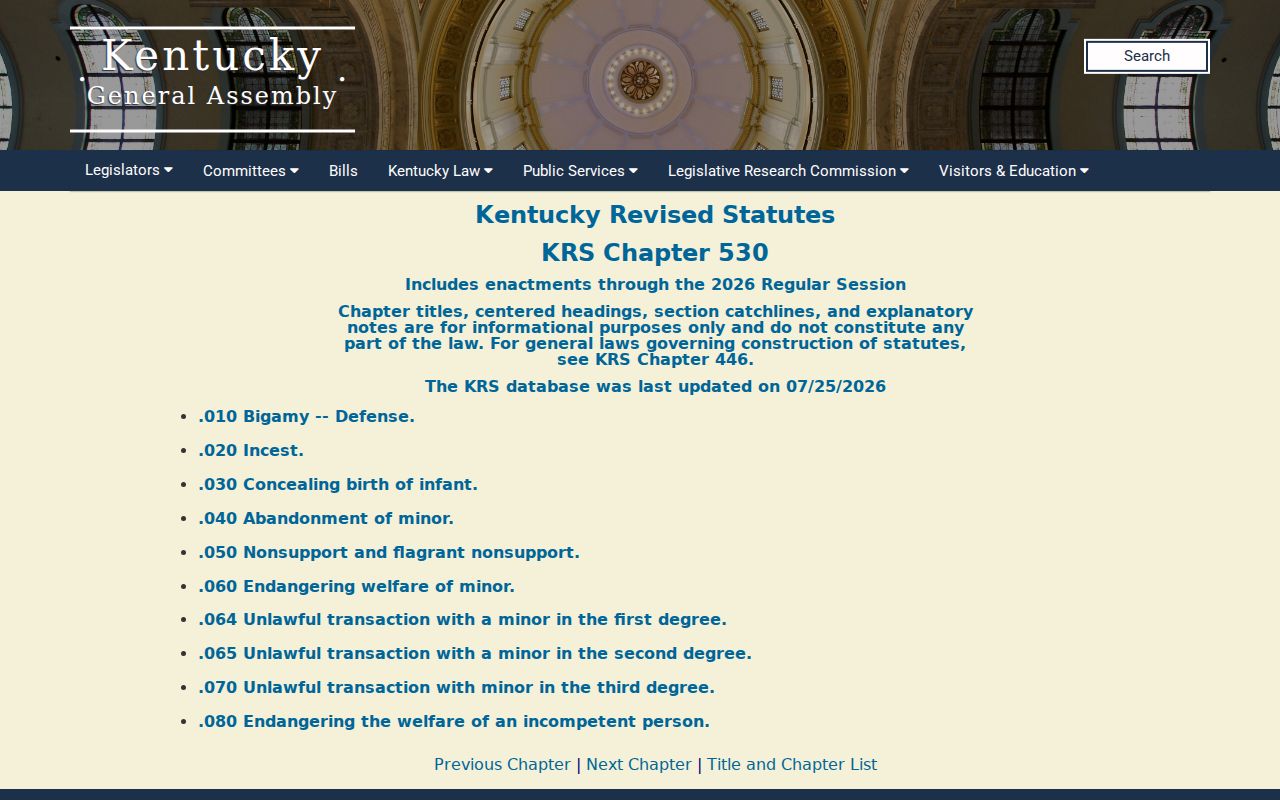
The statute and entered expungement order control public treatment. A missing search result alone does not disclose why a record is unavailable.
Federal Cases Outside Pendleton County Courts
Pendleton County lies within the U.S. District Court for the Eastern District of Kentucky. AOC reports contain no federal information, and the Pendleton clerk does not maintain federal dockets. Federal criminal filings use the federal court and PACER, subject to registration, current federal fees, and restrictions on sealed cases or documents.
The Eastern District of Kentucky is the court source for local federal jurisdiction.
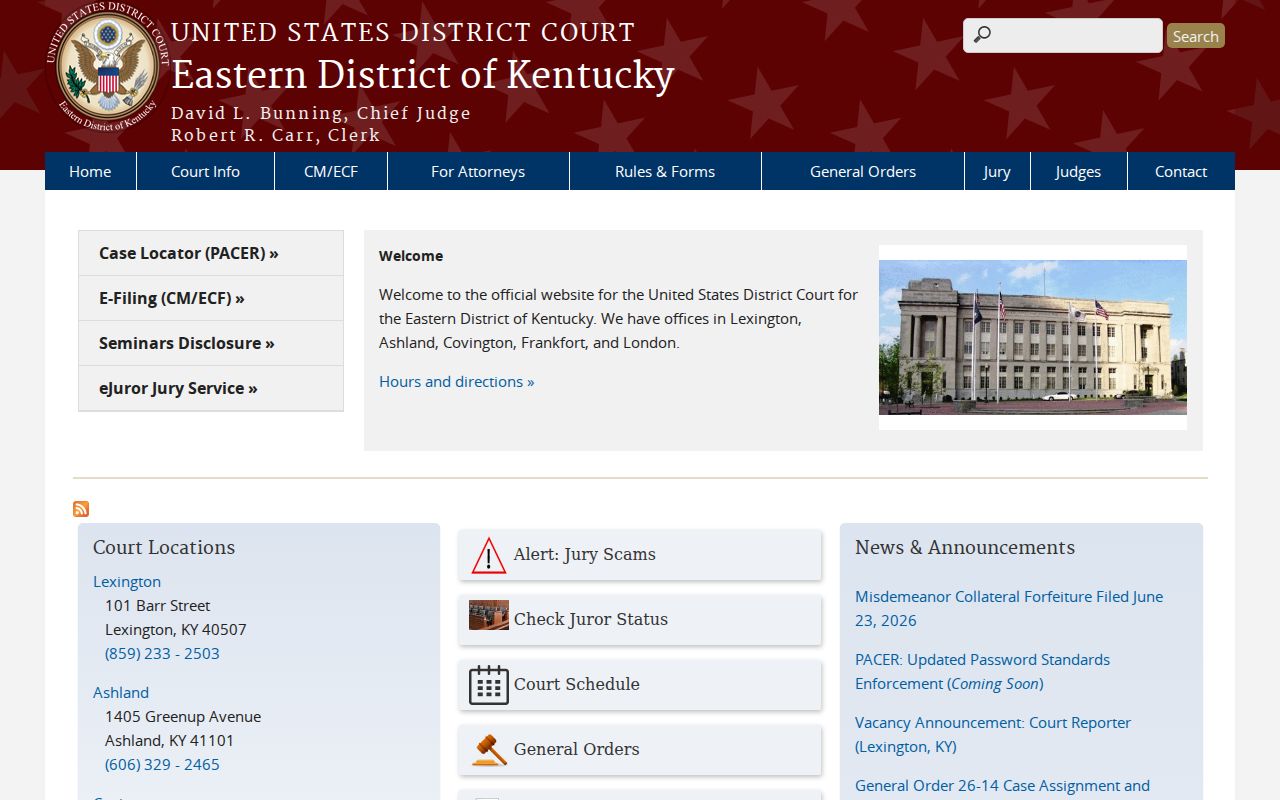
This federal layer remains separate from Kentucky District and Circuit Court records kept in Falmouth. PACER supplies federal docket access.
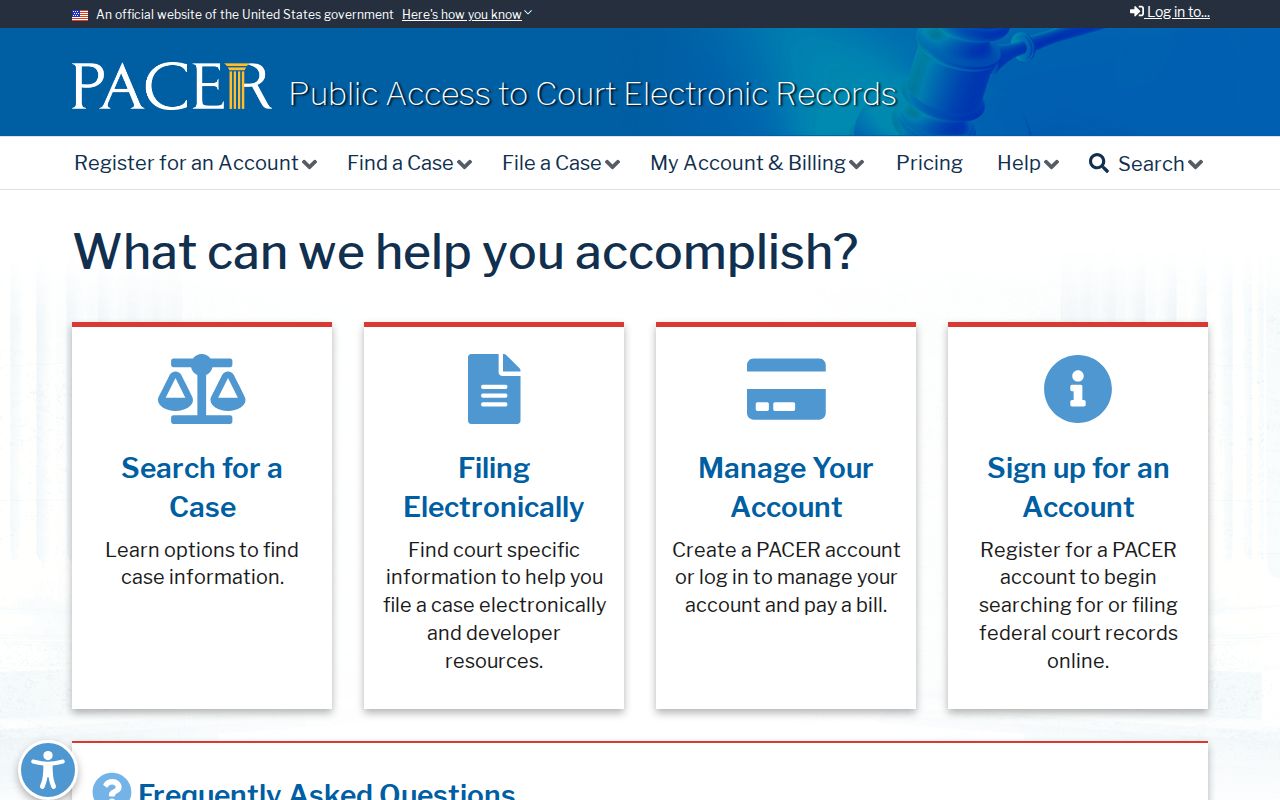
A PACER docket can identify filings and events, but sealed federal material remains unavailable and must not be inferred from gaps.
Pendleton County Case Record Access and Restrictions
Kentucky court records are obtained under judiciary access rules from the clerk that heard the case, not through an ordinary county executive-branch open-records request. Public access can still exclude juvenile, mental-health, domestic-violence, expunged, purged, sealed, and otherwise confidential matters. Social Security numbers, protected victim or minor information, medical details, and other protected identifiers may be redacted.
If a Pendleton County case does not appear in an AOC report, contact the clerk with the name, approximate year, and case type. The matter might be older than the report's coverage, confidential by law, expunged, purged, recently filed, off-site, or indexed differently. Ask what can be confirmed without demanding protected information. For an authoritative outcome, obtain the available signed order or judgment and verify every charge separately.